
There’s something about playing golf in Scotland that’s difficult to explain. Something you don’t quite understand until you’ve experienced it.
Don’t get me wrong, golf is a magical sport wherever you play it. The courses, the scenery, the competition, the frustration of a game that looks incredibly simple from the outside. The time spent with friends and family. The joy of beating your rival in a club match, or the despair of losing to the bugger again.
But golf in Scotland has something else. Something intangible. Almost spiritual.
There’s a romanticism in the air here. History seems to seep from the walls. It’s in the land, the buildings and the people.
Despite the world changing dramatically, Scotland has managed to hold on to something.
We’ve had Romans, Vikings, wars with England, attempts to suppress our culture and centuries of change. Yet here we are, this small country on the edge of a small island, still fiercely attached to our history and identity.
History isn’t just something you read in a textbook here. It’s something you experience.
And nowhere is that more apparent than in golf.
The game has been played on Scottish soil for at least 500 years. We have courses that have existed for more than 150 years, and at Carnoustie golf has been played on the linksland around the town for centuries.
Links golf is the game in its purest form. The hard turf, the wind, the rain, the bounce and roll. The days when you’re battling a 30 mph wind, and those glorious summer evenings when it’s flat calm and the sun barely seems to set.
You’re playing the same game, on much of the same ground, facing many of the same challenges as the men who helped make golf what it is.
Old Tom Morris, Harry Vardon, Donald Ross, the Smith brothers. The pioneers of the sport.
You aren’t just visiting a famous golf course. You’re walking through the history of the game.
For many Americans, coming to Scotland really is coming home.
Millions have Scottish ancestry. But there’s another connection, even for those who don’t.
They’ve spent their lives watching the Open Championship and the Dunhill. They’ve grown up seeing St Andrews, Carnoustie, Troon and the great Scottish links on television.
They know these places before they’ve ever set foot in the country.
And when they finally arrive, there’s a feeling of familiarity. A sense of belonging. One of the things visitors tell me most often is that Scotland feels like home.
And I think that’s part of the magic. Scotland has promised them so much for so many years, and somehow it manages to overdeliver.
I see that every day at Carnoustie.
When I meet my players, they’ve usually been on site for an hour or so. They’ve visited the pro shop, hit a few balls in the simulator and rolled some putts on the immaculate practice green.
Then we walk to the first tee.
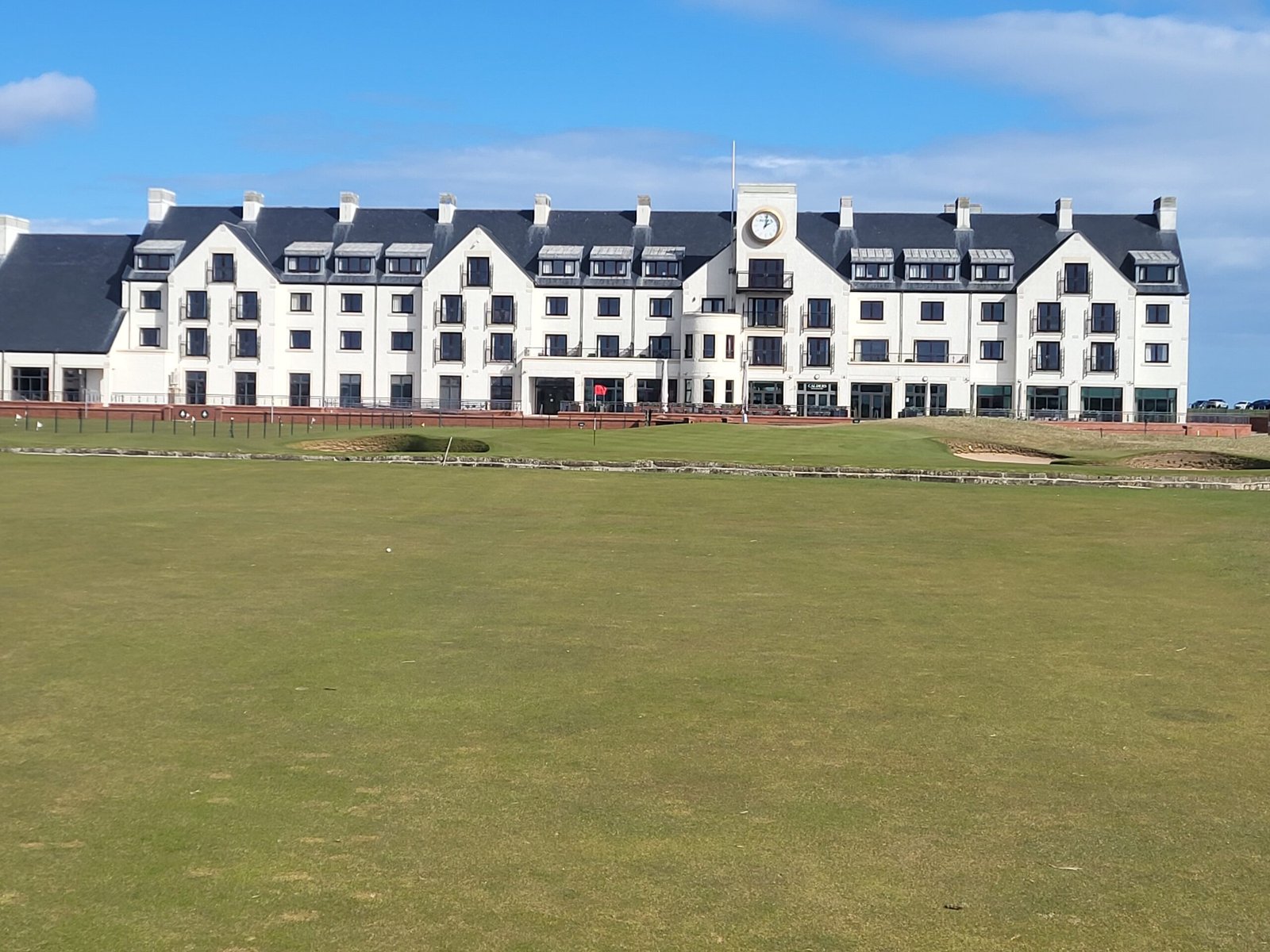
The iconic Carnoustie Hotel behind them. The Championship Course stretching out ahead.
They’re about to play Carnasty.
They’ve heard all the stories. The toughest course on the Open rota. The place that has brought some of the greatest golfers in history to their knees.
Most have a mixture of excitement and trepidation.
Some are genuinely terrified.
I’ve seen grown men shaking so badly they can barely get the tee into the ground.
They look down the first fairway and think it’s terribly narrow. In reality, it’s the widest fairway on the course.
That’s what Carnoustie’s reputation does to people.
Some have been dreaming about this moment since they were little boys watching the Open with their fathers.
I’ve met men in their early eighties who have finally made it here.
Think about that. A lifetime of loving golf, and now they’re standing on the first tee at Carnoustie.
And so often they’re not here alone.
Fathers and sons, brothers, uncles, cousins. Groups of friends who’ve talked about making the trip for decades.
And one of my favourites, grown men who’ve done well in life and brought their fathers over. Fathers who spent their lives dreaming of Scottish golf but never thought they’d have the money to make the trip themselves.
The father who introduced his boy to golf all those years ago, who perhaps spent years watching the Opens with him, is now being taken to Scotland by that same boy.
A dream they once shared, finally coming true.
Sometimes these trips are about celebrating something. Sometimes they’re about remembering somebody who’s no longer here.
But they’re almost always about more than golf.
Then you get to play.
The first tee at St Andrews. The Postage Stamp at Troon. The Redan at North Berwick. Hogan’s Alley and the final four holes at Carnoustie.
You’re walking where your golfing heroes walked.
Ben Hogan came to Carnoustie in 1953 and won the only Open Championship he ever played. Today you can stand on those same tees, look towards those same bunkers and face the same fundamental challenge.
You’re not going to hit it like Hogan. Most of us certainly aren’t.
But you’re playing his game, on his ground, in the same Scottish weather.
There’s something extraordinary about that.
And then comes the eighteenth.
You’ve spent four or five hours experiencing one of the great golf courses of the world. You’ve fought the wind, found the bunkers, made some wonderful shots and probably a few you’d rather forget.
Now you’re walking down one of the most famous finishing holes in golf.
It’s difficult to put into words what that moment means to somebody who’s waited half a lifetime to experience it.
But I get to see it.
And do you know what I hear more than almost anything else?
“It’s even better than I imagined.”
“I wish I’d come sooner.”
“I’m definitely coming back.”
People arrive with expectations built up over thirty, forty or fifty years. And somehow Scotland still exceeds them.
And for me, there’s another side to all of this.
I work at the world-famous Carnoustie Golf Links, in the town of my ancestors. My great-uncle played as a marker in the very first Open Championship held here in 1931. My children are the sixth generation of my family to grow up in Carnoustie.
For six months of the year I get to walk one of the greatest courses on earth almost every day.
That’s a privilege in itself.
But I also get to share it with people who couldn’t be happier to be there. People having some of the best days of their lives, making memories with the people they love.
The special moments that happen on almost every round.
It’s a privilege on a privilege, all the way down.
And those visitors remind me constantly of just how fortunate I am.
Every country has people who believe theirs is the best. Scotland is no different.
But there’s something rather special about having people travel from all over the world and tell you, often with genuine emotion, that there’s nowhere quite like it.
Golf in Scotland hits different.
I know it does.
Because you’re the ones who tell me.